Our Curriculum
A bilingual education combining the Polish national curriculum with an English-language programme informed by leading international approaches, including Cambridge-inspired learning, inquiry, and STEAM.





Get to Know Us
Languages
Language is central to how children think, communicate and learn. At Britannica, bilingualism is not treated as an add-on, but as a lived part of daily school life.
Children learn through meaningful exposure to English and Polish across the school day, developing confidence in both languages while building the cognitive, cultural and academic advantages of bilingual education.
Get to Know Us

Get to Know Us

Get to Know Us
A true bilingual environment
Our model is designed to give children sustained exposure to both English and Polish, using each language purposefully across teaching, communication and school life.
Children encounter English not only in designated lessons, but as a language of inquiry, discussion, classroom interaction and discovery.
Polish remains equally valued, providing strong foundations in literacy, identity and the requirements of the Polish national curriculum.
Get to Know Us
What bilingualism supports
Research shows bilingual education can support:
-
Cognitive flexibility
-
Stronger problem-solving
-
Greater metalinguistic awareness
-
Confidence in communication
-
Cultural openness
-
Long-term academic benefits
At Britannica, we see bilingualism not simply as learning two languages, but learning to think across two linguistic worlds.
Get to Know Us

Get to Know Us

Get to Know Us
Spanish (Early Additional Language)
Spanish (Early Additional Language)
Alongside our bilingual core, children are introduced to Spanish through age-appropriate activities such as songs, conversation, stories, and cultural exploration.
This early exposure supports curiosity, listening skills, and confidence in learning additional languages.
Additional Language from Class 4 (Optional)
From Class 4, pupils may have the opportunity to begin studying an additional modern foreign language (subject to programme development and demand).
This may include languages such as:
-
German
-
French
-
Spanish continuation
This allows children to build on their bilingual foundation and extend their linguistic repertoire further.
STEAM, Inquiry and Project-Based Learning
What is STEAM?
STEAM brings together Science, Technology, Engineering, the Arts and Mathematics in ways that help children explore how ideas connect across disciplines.Rather than learning subjects only in isolation, children are encouraged to investigate problems, design solutions, create, experiment and think critically.At Britannica, STEAM is not simply an additional subject, but part of how children learn to understand the world.
Why include the Arts?
The Arts are an essential part of STEAM.
Creativity, imagination, design thinking, storytelling and artistic expression help children develop original ideas, approach problems flexibly and communicate their thinking.
Innovation requires both analytical and creative thought.
Inquiry-Based Learning
Children are encouraged to ask questions such as:
-
Why does this happen?
-
How does this work?
-
What might happen if…?
-
How could we improve this?
Inquiry develops curiosity, reasoning, and independent thinking.
Project-Based Learning
Children engage in projects that connect knowledge across subjects and culminate in meaningful outcomes.
Projects may involve:
-
research
-
collaboration
-
design
-
presentation
-
reflection
Children do not simply complete tasks — they develop ideas.


Experiential Learning
We believe children learn powerfully through direct experience.
Through experimentation, making, observation and practical application, ideas become tangible and memorable.
Children learn not only by studying the world, but by engaging with it.
Example STEAM Project:
Designing a Sustainable School Garden
Question:
How can we design a garden that helps plants, supports wildlife and uses resources responsibly?
Science
Children explore:
-
Plant growth
-
Ecosystems
-
Soil and water
-
Pollinators and biodiversity
Technology
Children may use: -
Research tools
-
Observation tools
-
Digital planning resources
-
Simple irrigation ideas
Engineering
Children design: -
Garden beds
-
Watering systems
-
Structures to support plant growth
-
They test ideas and improve designs.
Arts -
Children sketch layouts, create botanical drawings, and consider beauty, design, and creative solutions.
Mathematics -
Children apply:
-
Measurement
-
Area and spacing
-
Counting and recording growth
-
Comparing data over time
Final Challenge -
Can we create a garden that is beautiful, sustainable, and supports living things?
-
Children investigate, design, test, and improve.
That is STEAM.
This approach supports: -
Creativity
-
Critical thinking
-
Problem-solving
-
Collaboration
-
Confidence
-
Deeper conceptual understanding
-
These are foundations not only for future study, but for life.

How Children Learn
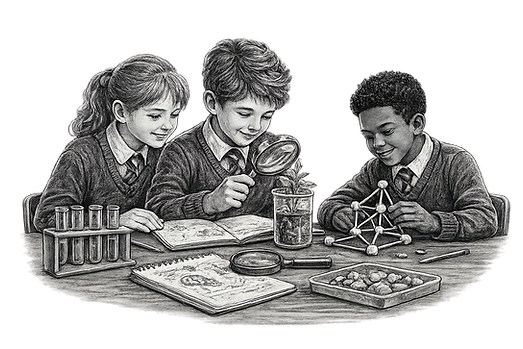
At Britannica, learning is active, engaging and purposeful.
Across all subjects, children are encouraged to:
-
ask questions
-
explore ideas
-
think critically
-
apply their knowledge
Teaching is shaped by:
-
inquiry-based learning
-
project-based learning
-
experiential, hands-on activities
Children are not passive recipients of information — they are active participants in their own learning.
Individual Attention and Support
Small Class Sizes
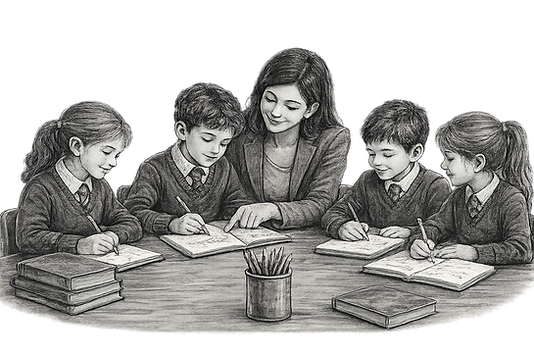
Smaller class sizes allow teachers to truly understand each child.
This enables:
-
closer relationships between teachers and pupils
-
more time for individual guidance
-
greater awareness of each child’s progress
At Britannica, we maintain approximately 16 children per class.
This is a carefully considered balance — small enough to ensure meaningful individual attention, yet large enough to support a rich social environment where children can collaborate, build friendships and learn from one another.
Children are supported, challenged and encouraged according to their needs.
Personalised Learning
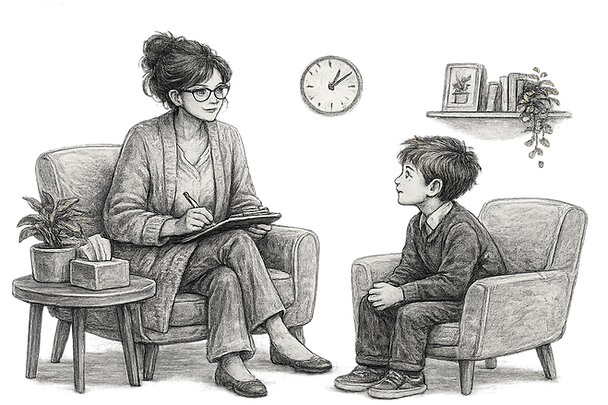
Teaching is adapted to support both: children who need additional help and children who are ready for greater challenge. This may include: tailored explanations, adjusted tasks, extension opportunities. Children are supported in building confidence while also being encouraged to reach their full potential.
Working in Partnership with Parents
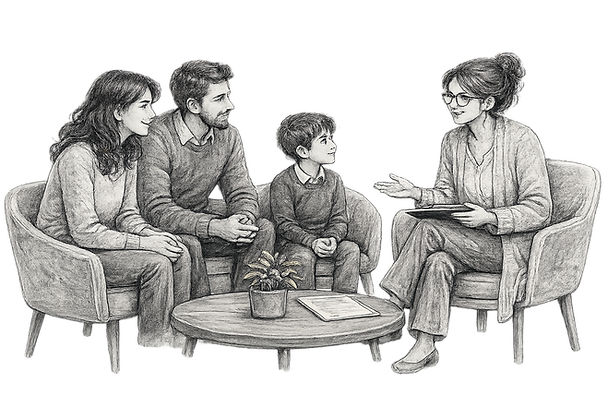
We believe that strong communication between school and home is essential.Parents are kept informed of their child’s development, progress, and well-being. This partnership ensures that each child receives consistent support both in school and at home.
Specialist Support
Where needed, we provide access to dedicated specialist support, including speech and language support, psychological support, physiotherapy, and emotional and developmental guidance.
Support is integrated thoughtfully into the school environment to ensure children feel secure and understood.
Why it Matters
When children feel understood, supported and confident, they are more willing to take risks in their learning, express their ideas and engage fully in school life.Individual attention is not an addition to learning — it is what makes meaningful learning possible.
TECHNOLOGY & FUTURE SKILLS
Technology at Britannica is used as a tool for thinking, creating and solving problems — not simply consuming information.Children learn to use technology with purpose, developing skills that will support them in an increasingly digital world.
HOW TECHNOLOGY IS USED
Technology is integrated into learning in meaningful and practical ways.
Children may:
-
design and create using digital tools
-
research and investigate ideas
-
model and test solutions
-
present and communicate their thinking
Technology supports understanding — it does not replace it.
CREATING, NOT JUST USING
We place a strong emphasis on active creation.
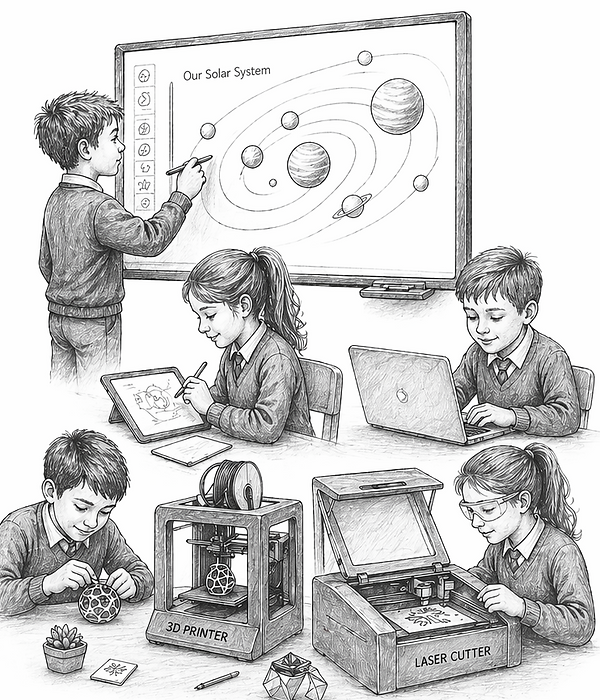
Children engage with tools such as:
-
interactive whiteboards, supporting dynamic lessons, collaboration and visual problem-solving
-
3D printers, allowing children to design and produce their own objects
-
laser cutters, developing precision, design thinking and making skills
-
digital drawing tablets, supporting creativity, design and visual communication
-
computers and age-appropriate digital tools for research, presentation and innovation
Technology becomes a way to bring ideas into reality.
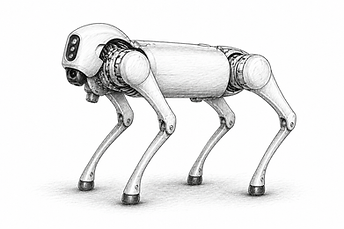
PREPARING FOR THE FUTURE
We aim to develop skills that go beyond specific tools.
Children build:
-
digital confidence
-
problem-solving ability
-
creativity and innovation
-
adaptability
-
logical thinking
These are essential for future learning, careers and life.
BALANCED APPROACH
We recognise the importance of balance.
Technology is used thoughtfully alongside:
-
hands-on learning
-
outdoor experiences
-
social interaction
-
creative exploration
Children learn when to use technology — and when not to.
EXAMPLE IN PRACTICE
Children might:
-
design a plant pot using a digital tablet
-
produce it using a 3D printer
-
install it in the school garden.
Technology at Britannica:
-
empowers children to create, not just consume
-
encourages them to think, not just follow
A Thoughtful, Balanced Education
At Britannica, education is designed to develop the whole child.
Through a combination of strong academic foundations, bilingual learning, creative exploration and real-world experiences, children are supported in becoming confident, capable and curious learners.
We believe that education should not only prepare children for exams, but for life.
A Place to Grow
Every child is encouraged to think, to question, to create and to grow at their own pace.
In a supportive and structured environment, children develop the confidence to express themselves, the resilience to overcome challenges and the curiosity to continue learning.
Academic Pathways
At Britannica, students follow a combined British-Polish curriculum, preparing them for the Polish Matura exam and internationally recognised Cambridge IGCSE qualifications.
Discover Britannica
We invite you to experience our school in person.